Accommodation New Zealand introduces
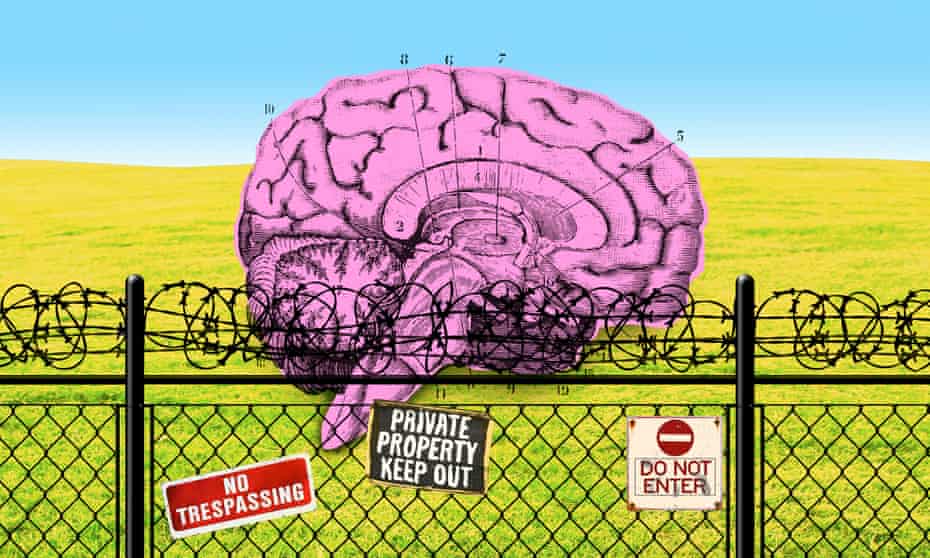
“The skull acts as a bastion of privacy; the brain is the last private part of ourselves,” Australian neurosurgeon Tom Oxley says from New York.
Oxley is the CEO of Synchron, a neurotechnology company born in Melbourne that has successfully trialled hi-tech brain implants that allow people to send emails and texts purely by thought.
In July this year, it became the first company in the world, ahead of competitors like Elon Musk’s Neuralink, to gain approval from the US Food and Drug Administration (FDA) to conduct clinical trials of brain computer interfaces (BCIs) in humans in the US.
Synchron has already successfully fed electrodes into paralysed patients’ brains via their blood vessels. The electrodes record brain activity and feed the data wirelessly to a computer, where it is interpreted and used as a set of commands, allowing the patients to send emails and texts.
BCIs, which allow a person to control a device via a connection between their brain and a computer, are seen as a gamechanger for people with certain disabilities.
BCIs are one of a range of developing technologies centred on the brain. Brain stimulation is another, which delivers targeted electrical pulses to the brain and is used to treat cognitive disorders. Others, like imaging techniques fMRI and EEG, can monitor the brain in real time.
Grant’s concerns about neurotech are not with the work of companies like Synchron. Regulated medical corrections for people with cognitive and sensory handicaps are uncontroversial, in his eyes.
But what, he asks, would happen if such capabilities move from medicine into an unregulated commercial world? It’s a dystopian scenario that Grant predicts would lead to “a progressive and relentless deterioration of our capacity to control our own brains”.
And while it’s a progression that remains hypothetical, it’s not unthinkable. In some countries, governments are already moving to protect humans from the possibility.
In 2017 a young European bioethicist, Marcello Ienca, was anticipating these potential dangers. He proposed a new class of legal rights: neuro rights, the freedom to decide who is allowed to monitor, read or alter your brain.
Today Ienca is a Professor of Bioethics at ETH Zurich in Switzerland and advises the European Council, the UN, OECD, and governments on the impact technology could have on our sense of what it means to be human.
Before Ienca proposed the concept of neuro rights, he had already come to believe that the sanctity of our brains needed protection from advancing neurotechnology.
“So 2015, around that time the legal debate on neurotechnology was mostly focusing on criminal law,” Ienca says.
Much of the debate was theoretical, but BCIs were already being medically trialed. The questions Ienca were hearing six years ago were things like: “What happens when the device malfunctions? Who is responsible for that? Should it be legitimate to use neurotechnology as evidence in courts?”
Ienca, then in his 20s, believed more fundamental issues were at stake. Technology designed to decode and alter brain activity had the potential to affect what it meant to be “an individual person as opposed to a non-person”.
While humanity needs protection from the misuse of neurotech, Ienca says, neuro rights are “also about how to empower people and to let them flourish and promote their mental and cerebral wellbeing through the use of advanced neuroscience and neurotechnology”.
Neuro rights are a positive as well as protective force, Ienca says.
It’s a view Tom Oxley shares. He says stopping the development of BCIs would be an unfair infringement on the rights of the people his company is trying to assist.
“Is the ability to text message an expression of the right to communicate?” he asks. If the answer is yes, he posits, the right to use a BCI could be seen as a digital right.
Oxley agrees with Grant that the future privacy of our brains deserves the world’s full attention. He says neuro rights are “absolutely critical”.
“I recognise the brain is an intensely private place and we’re used to having our brain protected by our skull. That will no longer be the case with this technology.”
Grant believes neuro rights will not be enough to protect our privacy from the potential reach of neurotech outside medicine.
“Our current notion of privacy will be useless in the face of such deep intrusion,” he says.
Commercial products such as headsets that claim to improve concentration are already used in Chinese classrooms. Caps that track fatigue in lorry drivers have been used on mine sites in Australia. Devices like these generate data from users’ brain activity. Where and how that data is stored, says Grant, is hard to track and even harder to control.
Grant sees the amount of information that people already share, including neuro data, as an insurmountable challenge for neuro rights.
“To think we can deal with this on the basis of passing legislation is naive.”
Grant’s solutions to the intrusive potential of neurotech, he admits, are radical. He envisages the development of “personal algorithms” that operate as highly specialised firewalls between a person and the digital world. These codes could engage with the digital world on a person’s behalf, protecting their brain against intrusion or alteration.
The consequences of sharing neuro data preoccupies many ethicists.
“I mean, brains are central to everything we do, think and say”, says Stephen Rainey, from Oxford’s Uehiro Centre for Practical Ethics.
Chile is not taking any chances on the potential risks of neurotechnology.
In a world first, in September 2021, Chilean law makers approved a constitutional amendment to enshrine mental integrity as a right of all citizens. Bills to regulate neurotechnology, digital platforms and the use of AI are also being worked on in Chile’s senate. Neuro rights principles of the right to cognitive liberty, mental privacy, mental integrity, and psychological continuity will be considered.
Europe is also making moves towards neuro rights.
France approved a bioethics law this year that protects the right to mental integrity. Spain is working on a digital rights bill with a section on neuro rights, and the Italian Data Protection Authority is considering whether mental privacy falls under the country’s privacy rights.
Australia is a signatory to the OECD’s non-binding recommendation on responsible innovation in neurotechnology, which was published in 2019.
Australian neuroscientist and ethicist Assoc Prof Adrian Carter, of Monash University, Melbourne, is described by peers as having a “good BS detector” for the real and imagined threats posed by neurotech. As a self-described ‘speculative ethicist’, he looks at the potential consequences of technological progress.
Hype that over-sells neuro treatments can affect their effectiveness if patients’ expectations are raised too high, he explains. Hype can also cause unwarranted panic.
“A lot of the stuff that is being discussed is a long way away, if at all”, says Carter.
“Mind-reading? That won’t happen. At least not in the way many imagine. The brain is just too complex. Take brain computer interfaces; yes, people can control a device using their thoughts, but they do a lot of training for the technology to recognise specific patterns of brain activity before it works. They don’t just think, ‘open the door’, and it happens.”
Carter points out that some of the threats ascribed to future neurotechnology are already present in the way data is used by tech companies every day.
AI and algorithms that read eye movement and detect changes in skin colour and temperature are reading the results of brain activity in controlled studies for advertising. This data has been used by commercial interests for years to analyse, predict and nudge behaviour.
“Companies like Google, Facebook and Amazon have made billions out of [personal data]”, Carter points out.
Dystopias that emerge from the data collected without consent aren’t always as boring as Facebook ads.
Oxford’s Stephen Rainey points to the Cambridge Analytica scandal, where data from 87 million Facebook users was collected without consent. The company built psychological voter profiles based on people’s likes, to inform the political campaigns of Donald Trump and Ted Cruz.
“It’s this line where it becomes a commercial interest and people want to do something else with the data, that’s where all the risk comes in”, Rainey says.
“It’s bringing that whole data economy that we’re already suffering from right into the neuro space, and there’s potential for misuse. I mean, it would be naive to think authoritarian governments would not be interested.”
Tom Oxley says he is “not naive” about the potential for bad actors to misuse the research he and others are doing in BCI.
He points out Synchron’s initial funding came from the US military, which was looking to develop robotic arms and legs for injured soldiers, operated through chips implanted in their brains.
While there’s no suggestion the US plans to weaponise the technology, Oxley says it’s impossible to ignore the military backdrop. “If BCI does end up being weaponised, you have a direct brain link to a weapon,” Oxley says.
This potential appears to have dawned on the US government. Its Bureau of Industry and Security released a memo last month on the prospect of limiting exports of BCI technology from the US. Acknowledging its medical and entertainment uses, the bureau was concerned it may be used by militaries to “improve the capabilities of human soldiers and in unmanned military operations”.
Concerns about the misuse of neurotech by rogue actors do not detract from what it is already achieving in the medical sphere.
At the Epworth centre for innovation in mental health at Monash University, deputy director Prof Kate Hoy is overseeing trials of neuro treatments for brain disorders including treatment-resistant depression, obsessive compulsive disorder, schizophrenia and Alzheimer’s.
One treatment being tested is transcranial magnetic stimulation (TMS), which is already used extensively to treat depression and was listed on the Medicare benefit schedule last year.
One of TMS’s appeals is its non-invasiveness. People can be treated in their lunch hour and go back to work, Hoy says.
“Basically we put a figure of eight coil, something you can hold in your hand, over the area of the brain we want to stimulate and then we send pulses into the brain, which induces electrical current and causes neurons to fire,” she says.
“So when we move [the pulse] to the areas of the brain that we know are involved in things like depression, what we’re aiming to do is essentially improve the function in that area of the brain.”
TMS is also free of side effects like memory loss and fatigue, common to some brain stimulation methods. Hoy says there is evidence that some patients’ cognition improves after TMS.
When Zia Liddell, 26, began TMS treatment at the Epworth centre about five years ago, she had low expectations. Liddell has trauma-induced schizophrenia and has experienced hallucinations since she was 14.
“I’ve come a long way in my journey from living in psych wards to going on all sorts of antipsychotics, to going down this path of neurodiverse technology.”
Liddell wasn’t overly invested in TMS, she says, “until it worked”.
She describes TMS as, “a very, very gentle flick on the back of your head, repetitively and slowly.”
Liddell goes into hospital for treatment, normally for two weeks, twice a year. There she’ll have two 20-minute sessions of TMS a day, lying in a chair watching TV or listening to music.
She can remember clearly the moment she realised it was working. “I woke up and the world was silent. I sprinted outside in my pyjamas, into the courtyard and rang my mum. And all I could say through tears was, ‘I can hear the birds Mum.’”
It is a quietening of the mind that Liddell says takes effect about the three- to five-day mark of a two-week treatment.
But despite how it has changed her life for the better, she is not naive about the dangers of setting neurotech loose in the world.
“I think there’s an important discussion to be had on where the line of consent should be drawn,” she says.
“You are altering someone’s brain chemistry, that can be and will be life changing. You are playing with the fabric of who you are as a person.”